

Think about football for a moment.
Imagine Lionel Messi is about to play one of the biggest matches of the season, like tonight against Spain.
You could spend hours analysing his finishing ability, passing statistics, physical condition and recent form. All of those things matter.
But would you ignore who he’s playing against?
Would you ignore whether his teammates are injured?
Of course not.
Even the greatest player in the world doesn’t perform in isolation. His performance is heavily influenced by the environment around him.
Investing is no different.
A great company can still disappoint if the macro backdrop turns against it. A currency can weaken despite positive domestic data if another central bank becomes even more hawkish. Even the strongest investment thesis can struggle when liquidity dries up or financial conditions tighten.
Yet this is exactly where many investors fall short.
One thing I’ve noticed over the years is that almost everyone in financial markets has their own niche.
FX traders spend their day watching price action, central banks and positioning.
Equity investors dive into earnings reports, management guidance and valuation models.
Bond traders focus on yields and inflation expectations.
Crypto investors follow adoption, regulation and on-chain metrics.
None of these approaches are wrong.
The problem starts when investors become so specialised that they stop looking at the bigger picture.
No matter what you trade or invest in, every asset exists within the same economic environment.
That’s where macroeconomics comes in.
You Can Be Right... and Still Lose Money
Imagine you’ve spent weeks researching a small-cap company.
Revenue is growing.
Management has a strong track record.
Margins continue to improve.
The balance sheet looks healthy.
Compared to its peers, the company appears cheap.
From a bottom-up perspective, it looks like a fantastic investment.
Now imagine inflation starts picking up again.
Central banks realise inflation isn’t coming down as quickly as expected and decide to keep interest rates higher for longer.
Suddenly, the investment case changes.
Not because management made a mistake.
Not because demand disappeared overnight.
But because the environment changed.
If that company needs to refinance debt next year, it won’t be borrowing at 2% anymore. It may have to refinance at 6%.
Projects that once looked profitable suddenly become difficult to justify.
Banks tighten lending standards.
Consumers reduce spending because financing has become more expensive.
Investors demand a higher return for holding risk assets, putting pressure on valuations.
The company itself may not have changed at all.
But the world around it has.
That’s exactly why macro matters.
Every Market Is Connected
One mistake I often see is people treating markets as if they operate independently.
They don’t.
Inflation influences central bank policy.
Central banks move interest rates.
Interest rates drive bond yields.
Bond yields affect borrowing costs.
Borrowing costs influence investment decisions, consumer spending and corporate profits.
Eventually, all of that feeds into equity prices, currencies and credit markets.
Nothing moves in isolation.
Once you begin connecting these dots, markets become much easier to understand.
Macro Gives You Context
I’ve never believed that macroeconomics replaces fundamental analysis.
It doesn’t.
Understanding a company’s business model still matters.
Valuation still matters.
Technical analysis can still improve timing.
Sentiment and positioning still have their place.
But macro provides something none of those tools can.
Context.
Take two companies with identical financials.
One operates during a period of falling inflation, declining interest rates and abundant liquidity.
The other faces sticky inflation, restrictive monetary policy and tightening credit conditions.
Do you really expect both companies to perform the same?
Probably not.
The environment matters.
Sometimes it matters more than the company itself.
This Isn’t Just About Equities
People often associate macro investing with hedge funds or economists.
In reality, macro affects every participant in financial markets.
If you trade FX, you’re trading relative economic strength and monetary policy.
If you trade bonds, you’re trading inflation, growth expectations and central bank decisions.
If you invest in equities, you’re investing in future cash flows that are directly influenced by interest rates, liquidity and the business cycle.
Even real estate depends on financing costs and credit availability.
Macro isn’t a niche.
It’s the foundation upon which every market operates.
Looking Beyond the Headlines
Another reason macro is so valuable is that it forces you to think in terms of cause and effect.
Markets rarely move because of a single headline.
They move because expectations change.
A CPI release doesn’t matter because inflation printed 2.9% instead of 2.8%.
It matters because that number changes expectations for central bank policy.
Those expectations influence bond yields.
Bond yields influence currencies.
Currencies influence financial conditions.
Financial conditions influence corporate earnings and asset valuations.
The best investors don’t simply react to economic releases.
They think one or two steps ahead.
Building a Better Investment Process
The strongest investment process combines both perspectives.
Start with the macro picture.
Where are we in the business cycle?
Are central banks easing or tightening?
Is liquidity expanding or contracting?
What is the bond market telling us?
Only then move to the micro level.
Which sectors are likely to benefit?
Which companies are positioned to outperform?
Which assets are fighting against the macro backdrop?
This doesn’t mean you’ll always be right.
No framework can promise that.
But it gives you a structured way of thinking about markets instead of reacting to every headline that appears on your screen.
The Bigger Picture
One of the biggest mistakes investors make is believing that every investment can be analysed in isolation.
It can’t.
Every company, every currency, every bond and every asset class operates within a broader economic environment.
Sometimes that environment provides a tailwind.
Sometimes it creates headwinds that even the strongest businesses struggle to overcome.
That’s why macroeconomics isn’t about predicting every economic data release or becoming an economist.
It’s about understanding the forces that shape markets over weeks, months and even years.
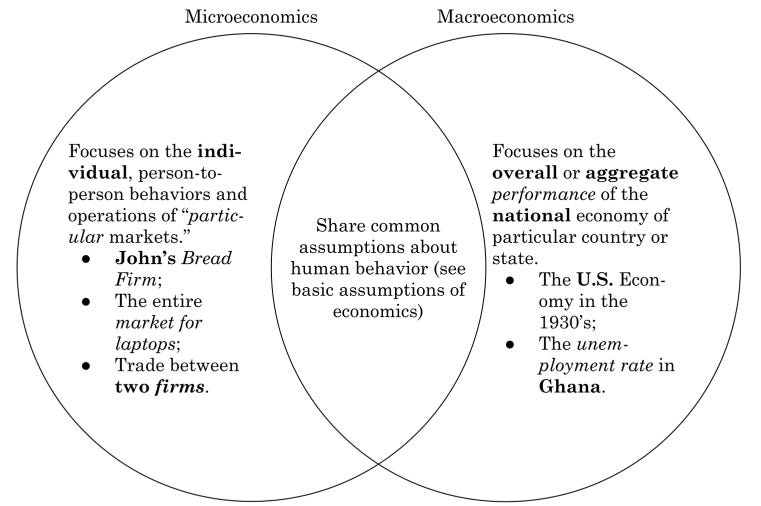
Micro analysis helps you identify opportunities.
Macro analysis tells you whether the environment is likely to support them.
The best investors don’t ignore either side.
They understand that the strongest investment decisions are made when both the micro story and the macro backdrop point in the same direction.
Wishing you a successful week ahead,
David Gauch - Founder, Gauch Research
Great read. I believe that universalism is making a comeback in all aspects of human life—an area it should never have left, despite increasing specialization.
This article supports that thesis because, just like a fractal, every niche of knowledge is universal in and of itself.
I’m going to reread it and take notes. Thank you, and best regards from Spain.
The distinction between being right about an asset and being right about the environment is crucial. A strong company can still struggle when liquidity tightens, financing costs rise, or the market demands a higher return for risk. Micro analysis finds the opportunity, but macro context helps determine whether the timing is working with you or against you.