

USD
The dollar trades the data and the ballot box.
The Fed held at 3.75-4.00%, upgraded its view of the economy and said inflation is still too high. Core PCE at 3.1% supports that language, and several forecasters expect hikes to resume in December. Tuesday's midterms matter mainly through the fiscal read-across rather than the party result. The Treasury refunding statement on Wednesday is the next test, since any change to coupon-size guidance would move long-end rates. Payrolls on Friday are expected around +55-65k with unemployment at 4.2% (prior +29k). A print below 30k would pull December pricing back. Overall skew: firm, with event risk on both sides.
EUR
The ECB has signalled a December hike.
The Council held at 2.50% and Lagarde pointed to a move in December. Her early departure adds a governance question to the policy debate. October flash HICP on Wednesday decides how firm that signal is, after September inflation of 3.8%. Retail sales on Friday are secondary. A soft print would make the euro vulnerable to a dollar bid, while a hot one keeps the December move close to fully priced. Overall skew: neutral vs USD, constructive vs CHF.
GBP
The Bank of England is expected to start tightening on Thursday.
A 25bp hike to 4.00% is the consensus and is largely in the price. The vote split and the new forecasts decide the reaction. A near-unanimous vote would support sterling. A hike with several votes for a hold would read as a one-off. Overall skew: neutral. Sterling needs a hawkish vote to extend.
JPY
A hawkish hold leaves the yen waiting on US rates.
The Bank of Japan held at 1.25% with one vote for a hike, raised its fiscal 2027 core inflation forecast to 2.6% and kept every meeting live. A December move to 1.50% is increasingly priced. Japan is shut on Tuesday and the BoJ minutes follow on Thursday. USD/JPY near 157 leaves little room before 160, where the authorities have intervened recently. Overall skew: neutral, firm on any dip in US rates.
CHF
The franc stays bid while energy prices set the mood.
Swiss CPI on Tuesday is the only domestic input, and the SNB has no meeting this week. Haven demand supports the franc while Brent stays above USD 110. Overall skew: firm vs EUR, neutral vs USD.
AUD
The RBA is set to hike again on Tuesday.
A 25bp move to 4.85% is about 80% priced after the trimmed mean rose 1.0% in the quarter against the Bank's own forecast of 0.8%. Guidance on a further hike in 2027 matters more than the decision. A hold would hit the currency hard. Overall skew: firm. Long AUD/NZD is the cleaner trade.
NZD
The kiwi has lost its rate support.
The RBNZ held at 2.75% on a 4-3 vote when a hike was largely priced, and a December hike is still about 80% in the curve. Q3 labour data on Wednesday is the main domestic release, and the election on Saturday adds noise. NZD/USD support sits near 0.5580, with 0.5490 below. Overall skew: soft.
CAD
The Bank of Canada hiked into weak jobs data.
The Bank raised to 2.50% to stop energy costs spreading and will decide one meeting at a time. The federal budget on Thursday and the jobs report on Friday are the tests, after employment fell by 68k in September. Another decline would challenge the hike. USD/CAD near 1.40 is the pivot, and higher oil supports CAD through the terms of trade. Overall skew: neutral.
Cross Asset Notes
Energy and the AI trade set the risk tone.
Brent trades above USD 110 and WTI near 104. The S&P 500 ended last week lower as the AI trade lost leadership, with Apple reporting on Monday and AMD on Tuesday. Tuesday's midterms and RBA, Thursday's BoE and Friday's payrolls set the tone this week.
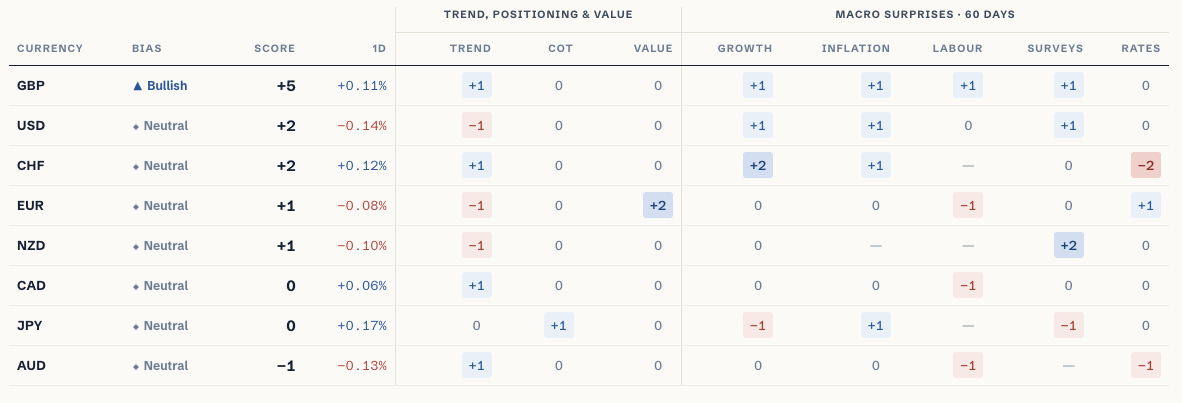
Q-Score Overview
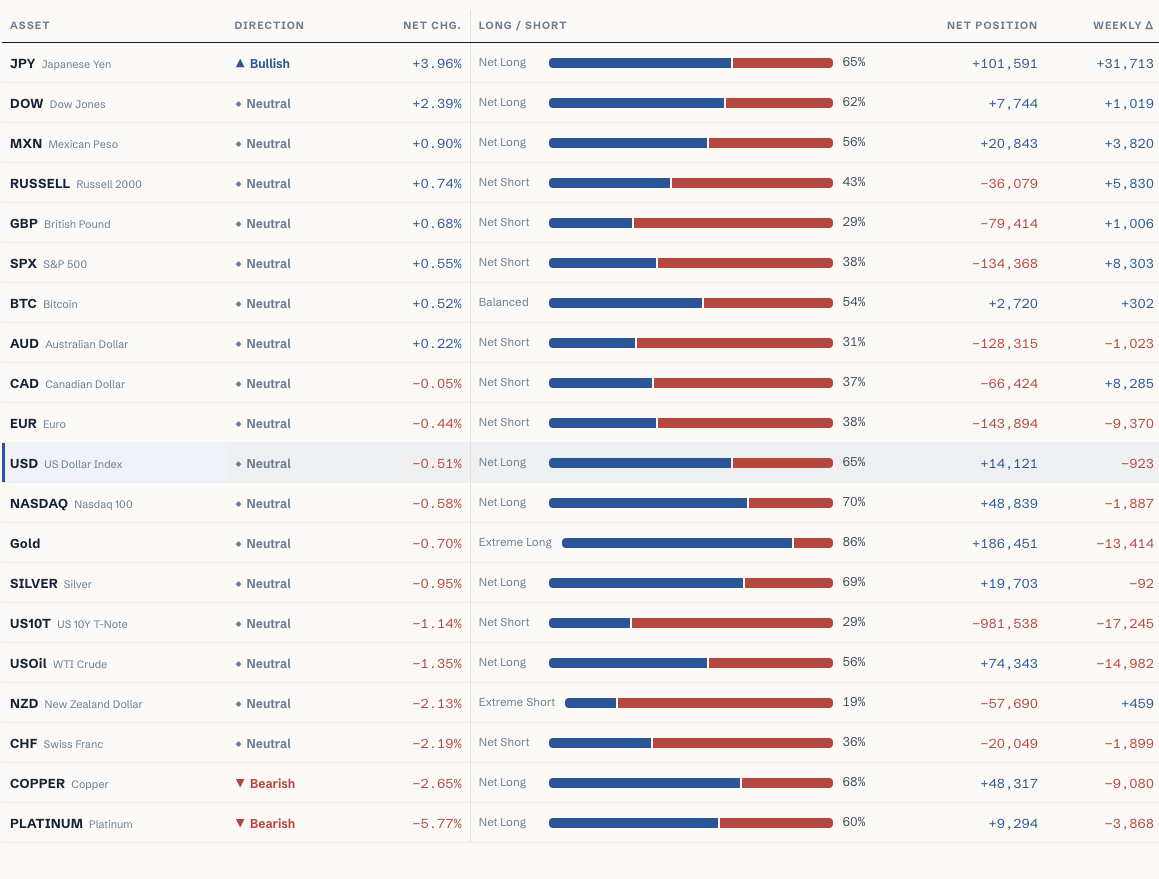
Institutional Positioning
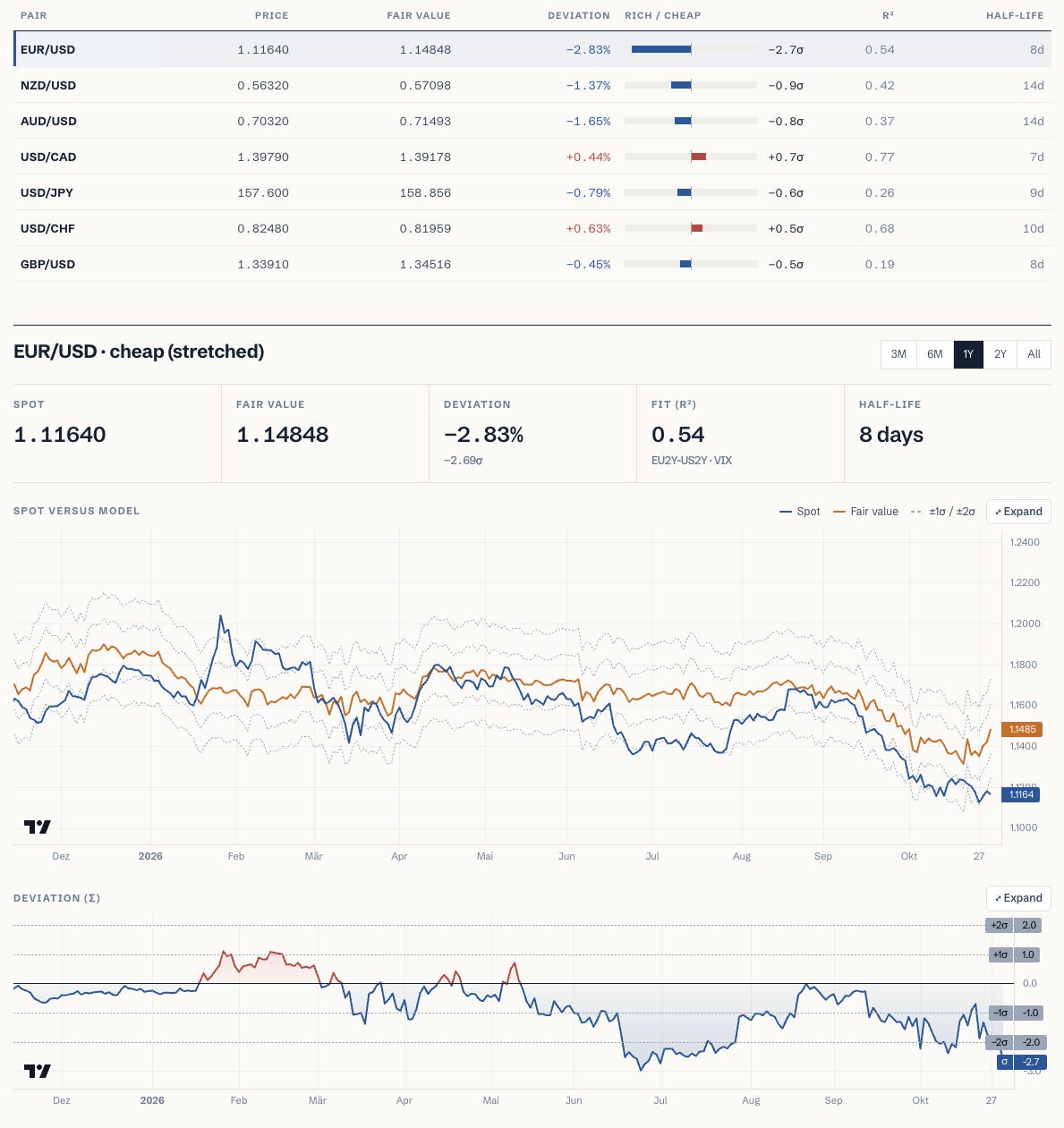
Fair Value Model
Wishing you a successful week ahead,
David Gauch — Founder, Gauch Research